In the app
Travelers see you nearby
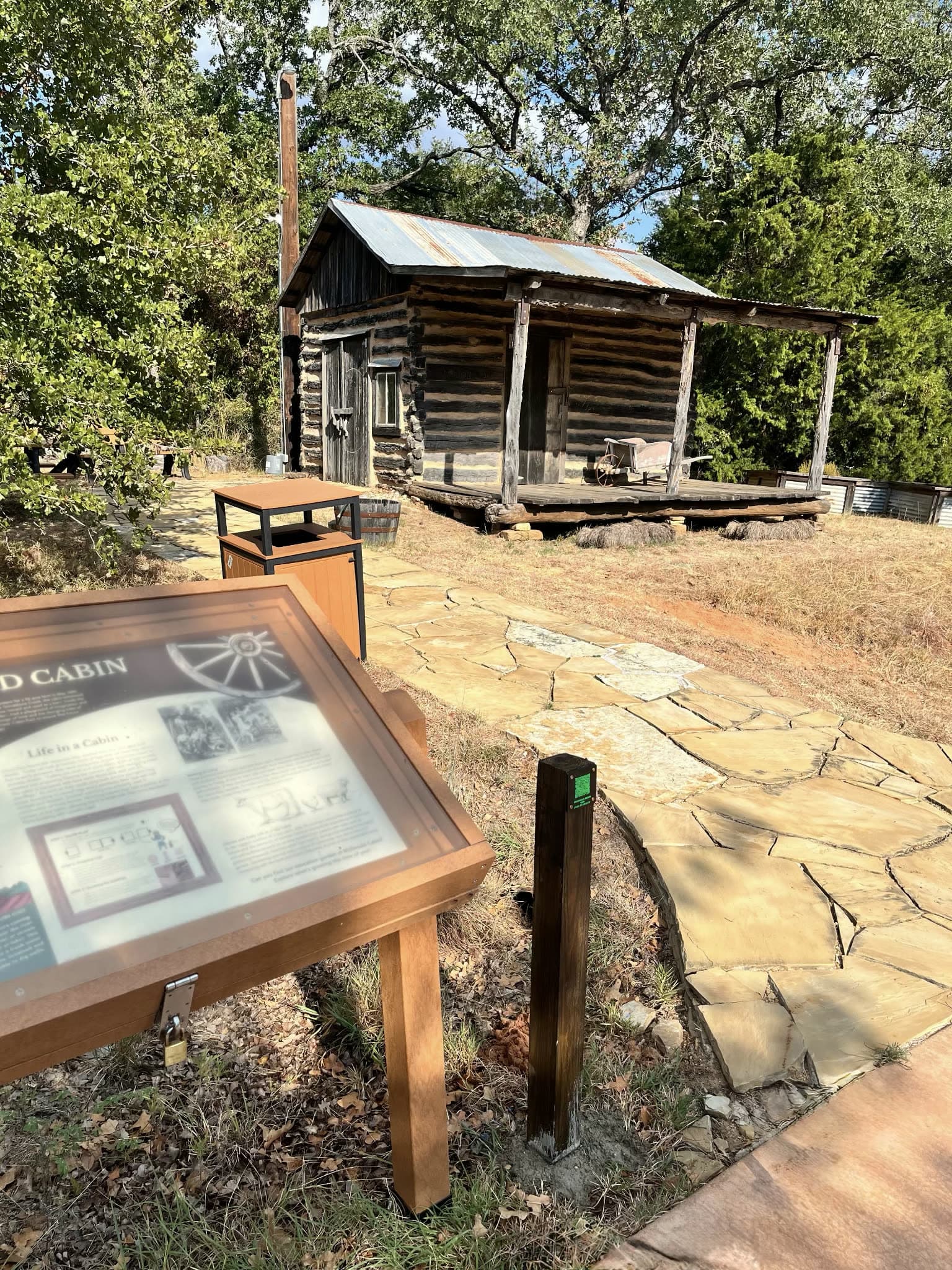
Your site appears on the map and among nearby experiences, next to 16,000+ historical markers.
RoadHistorical Experience Platform
One platform for QR check-in, narrated audio tiles and visitor reports. We write, record and set it all up. You approve every word.
Built for museums, libraries, historic sites and visitor centers.
Inside the Experience Platform
One sign-in for everything. Pick a tab to look around. Everything below is sample data from a made-up site.
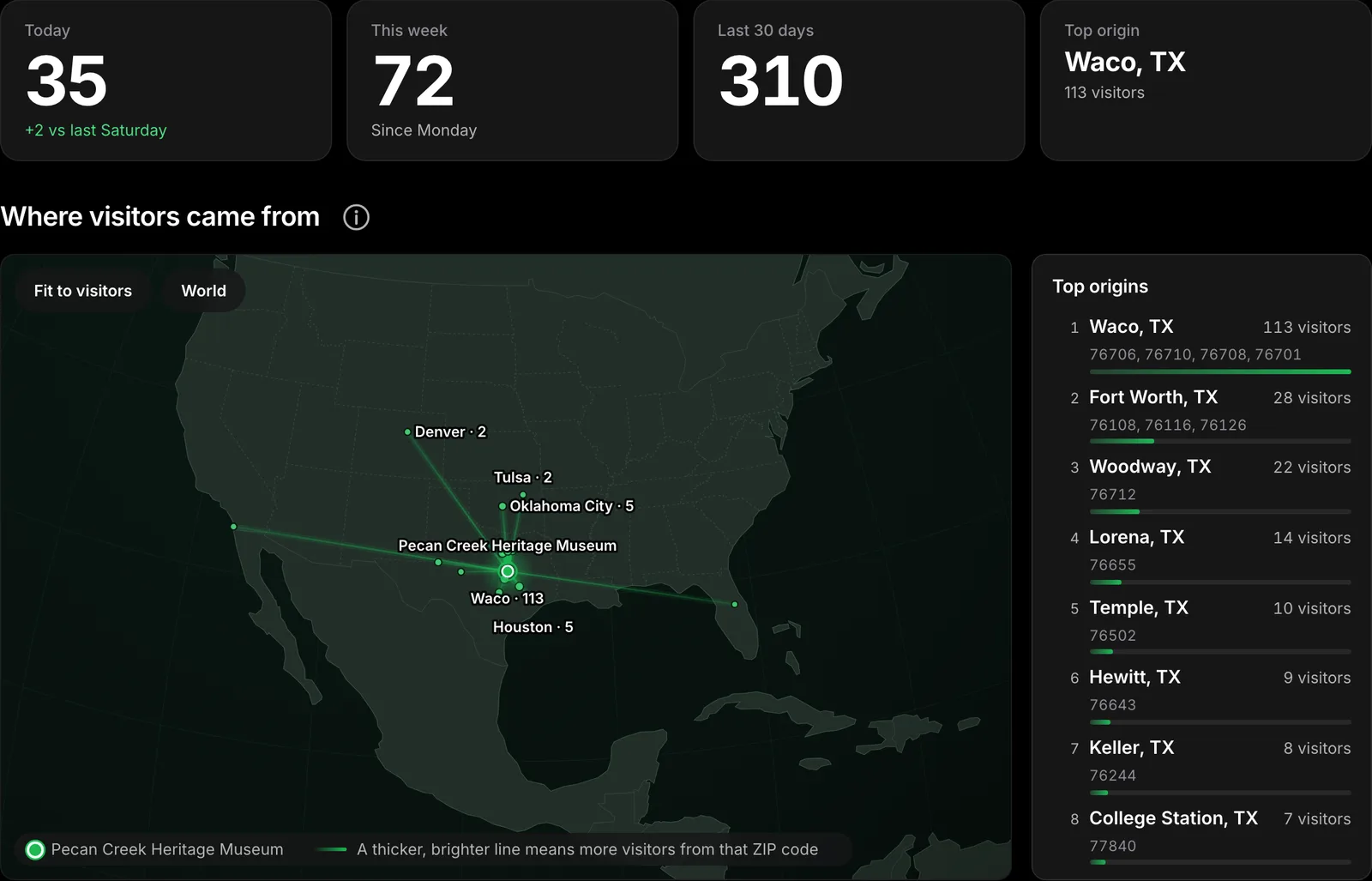
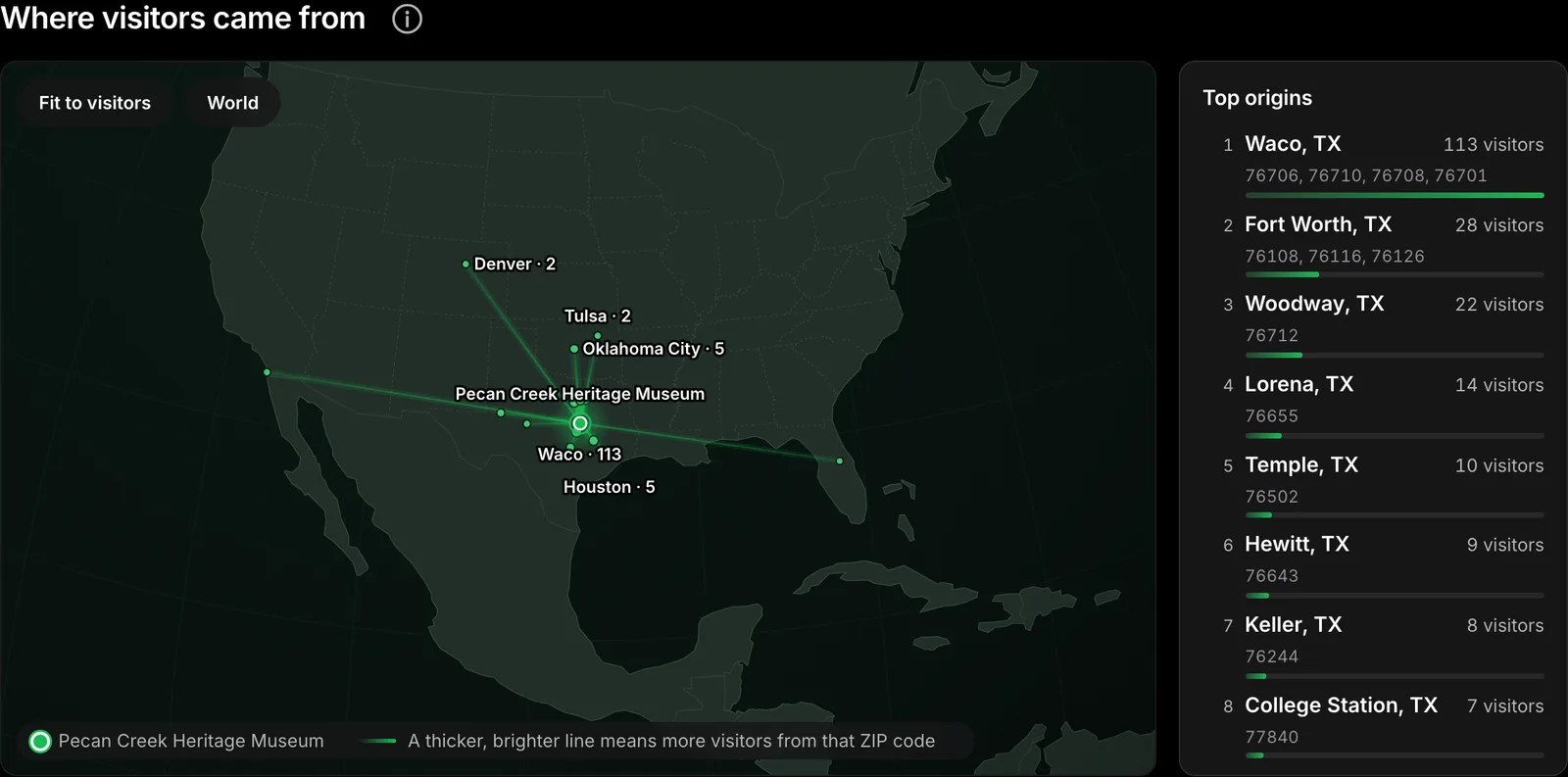
Every check-in with a ZIP code lands on a live map. Thicker lines mean more visitors from that place.
Know whether you are a local stop or a destination.
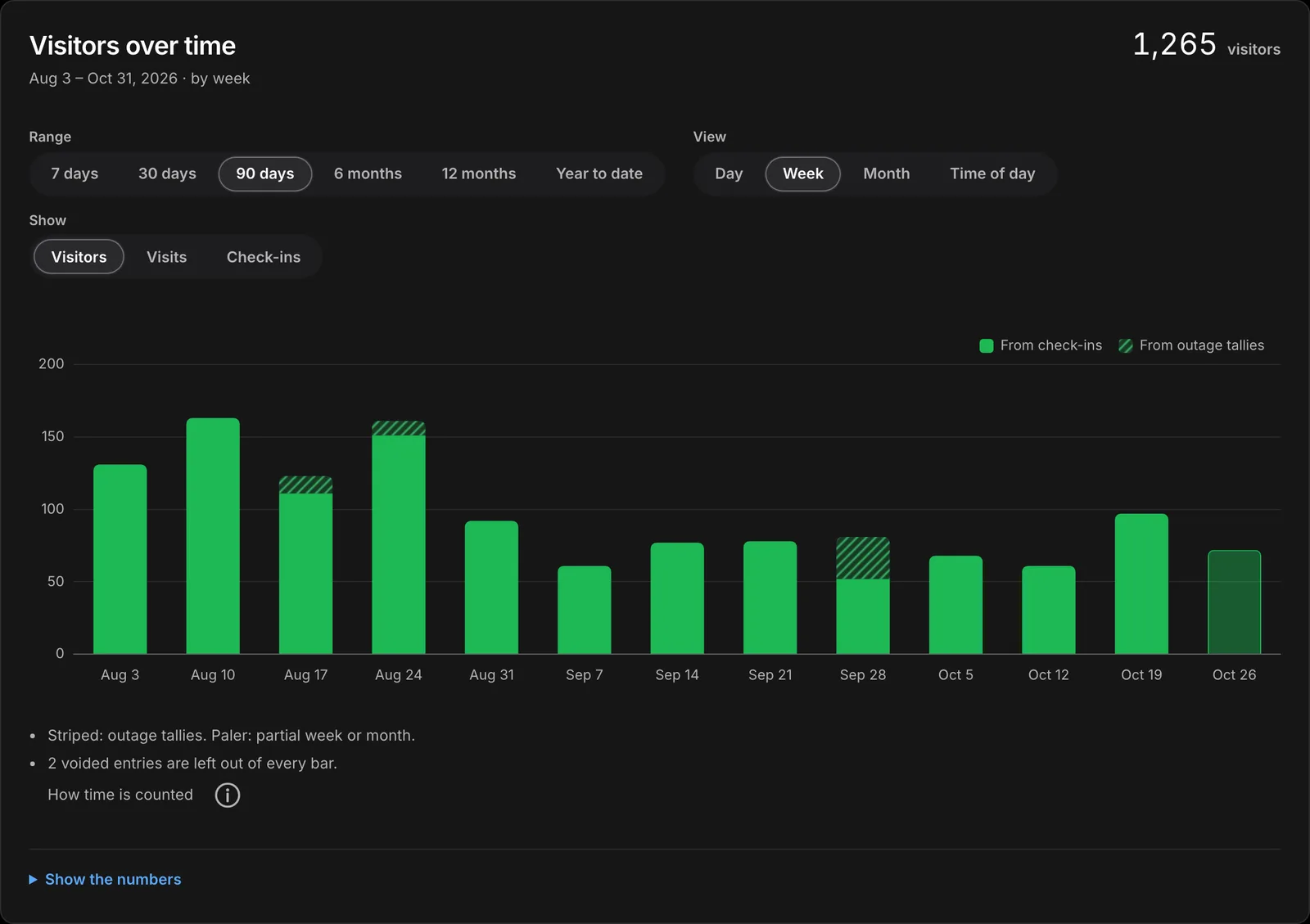
Visits by day, week or month, and the hours of the day you are busiest.
Answer “how many came?” in seconds.
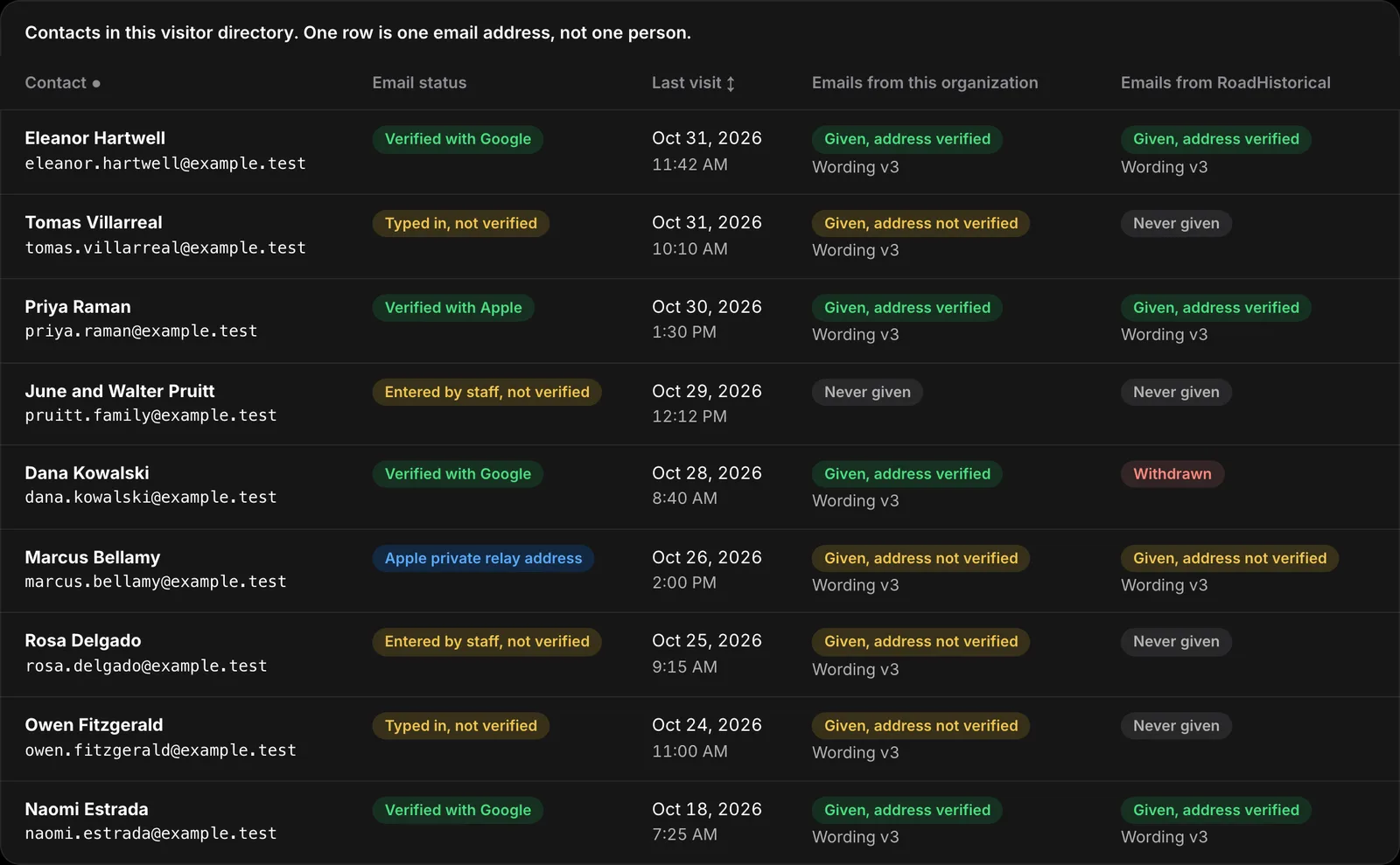
Everyone who signs in, on their own phone or at the front desk, with exactly what each person agreed to.
Keep the clipboard if you like. Nothing gets lost.
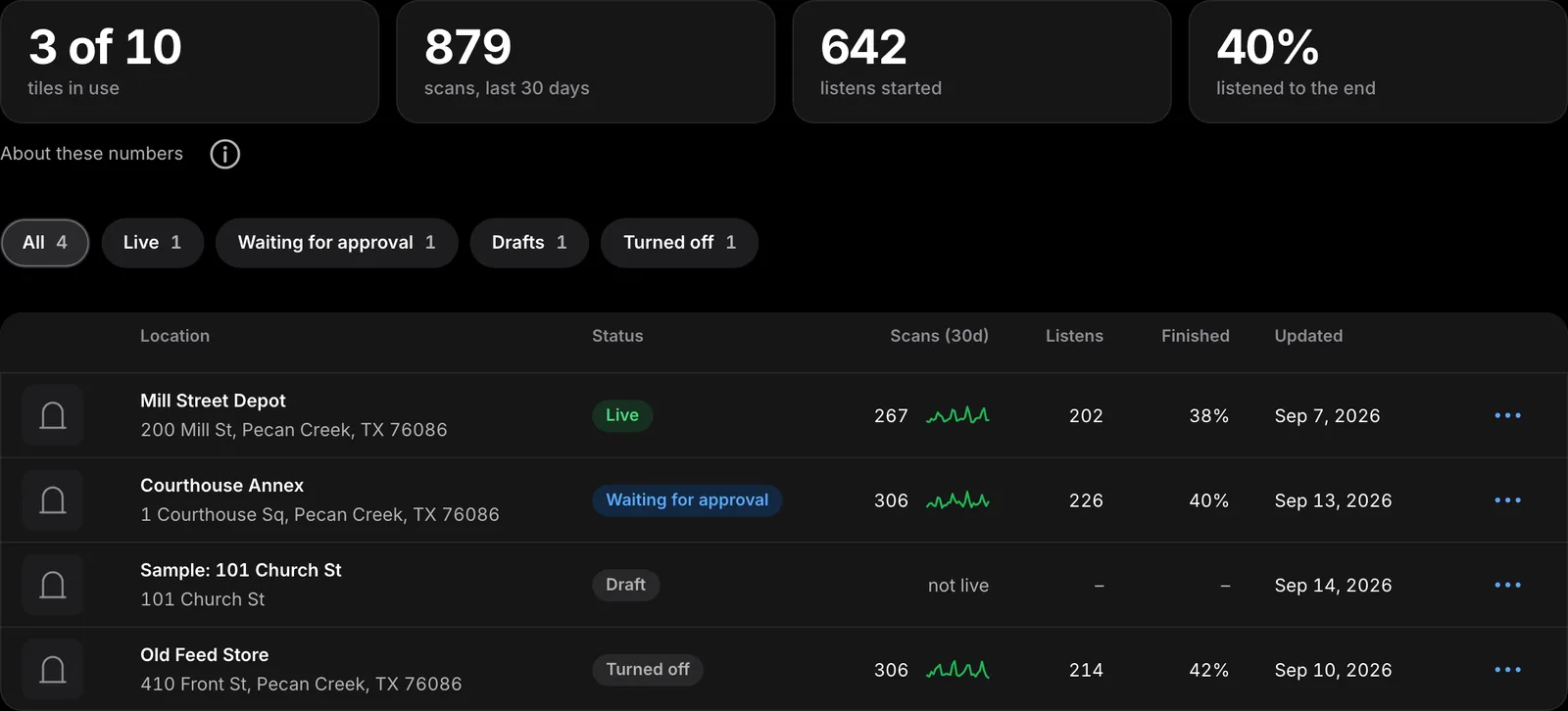
See every tile, its languages and how often it is played. New scripts wait for your approval.
Know which exhibits people stop for.
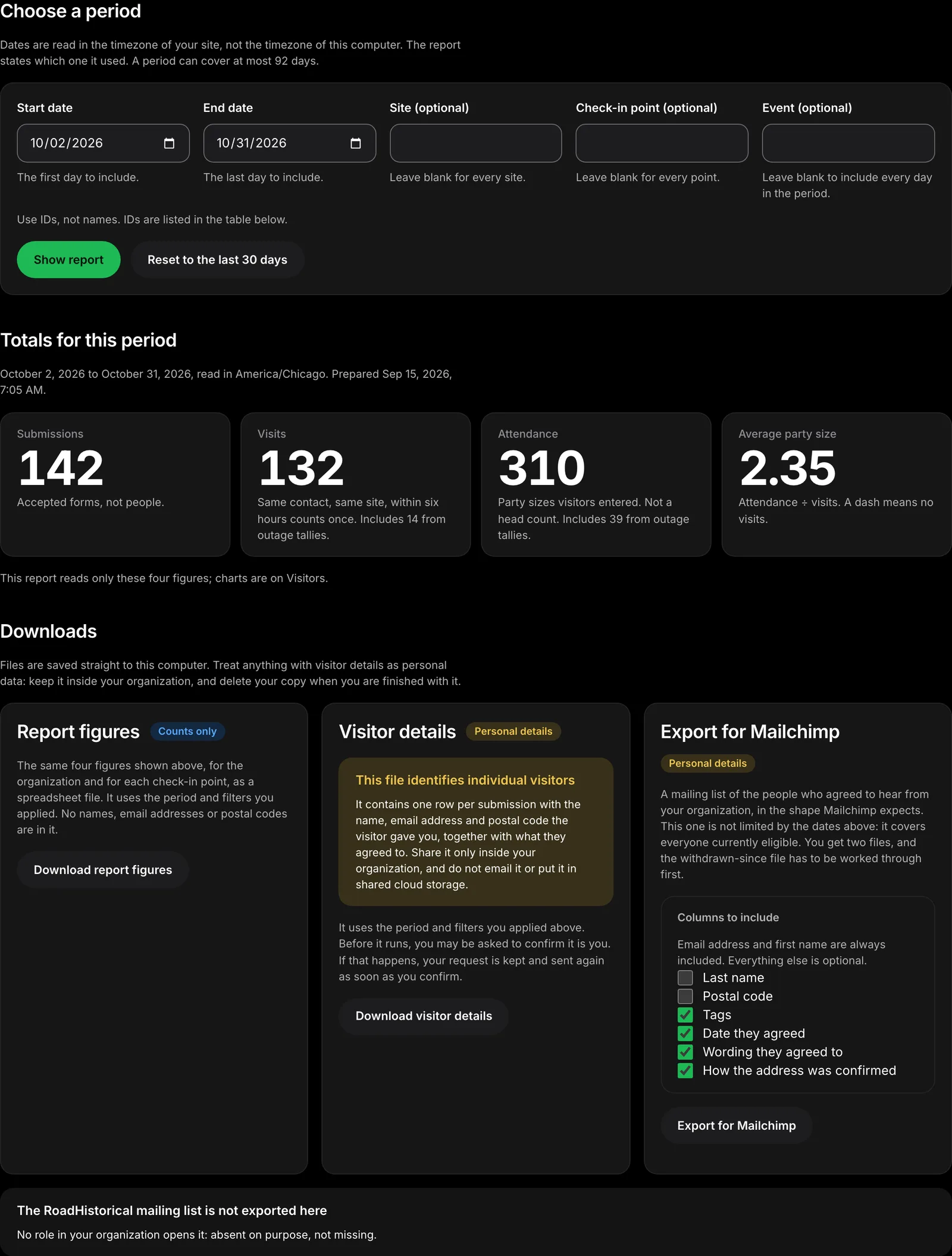
Pick the dates, see the totals and export them.
Attach real numbers to your next grant application.
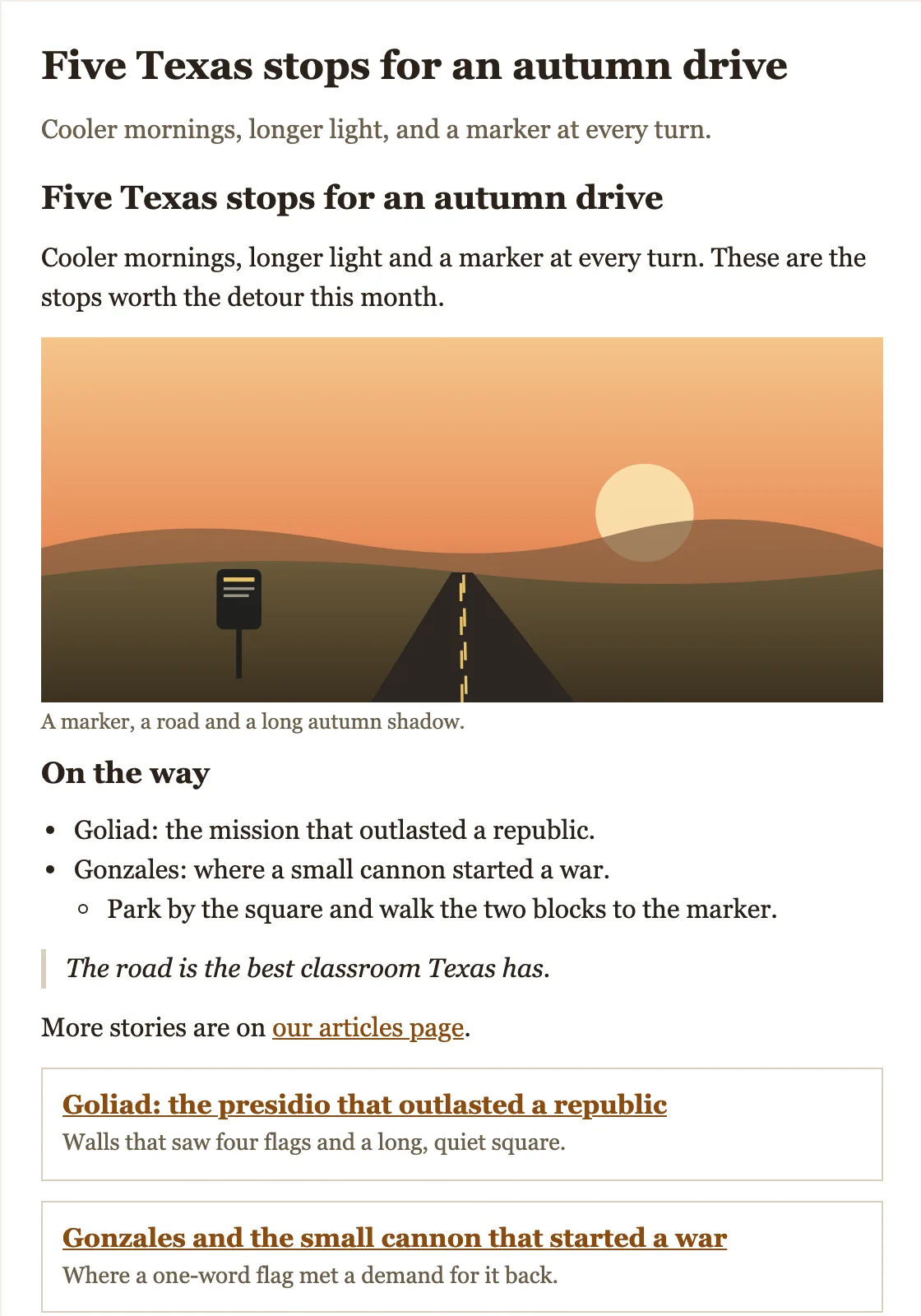
Visitors who opt in get your newsletter. We write it and send you a preview, and nothing goes out until you approve it.
Turn one-time visitors into return visitors.
Available today
Pick one or use them together. We set everything up, and your staff never has to touch the technology.
QR tiles · Bilingual narration · Tap to play
Guest book · Origins map · Attendance reports
Multi-stop tours
Your name on every send
Place page · Directions · Nearby stops
Your visitors
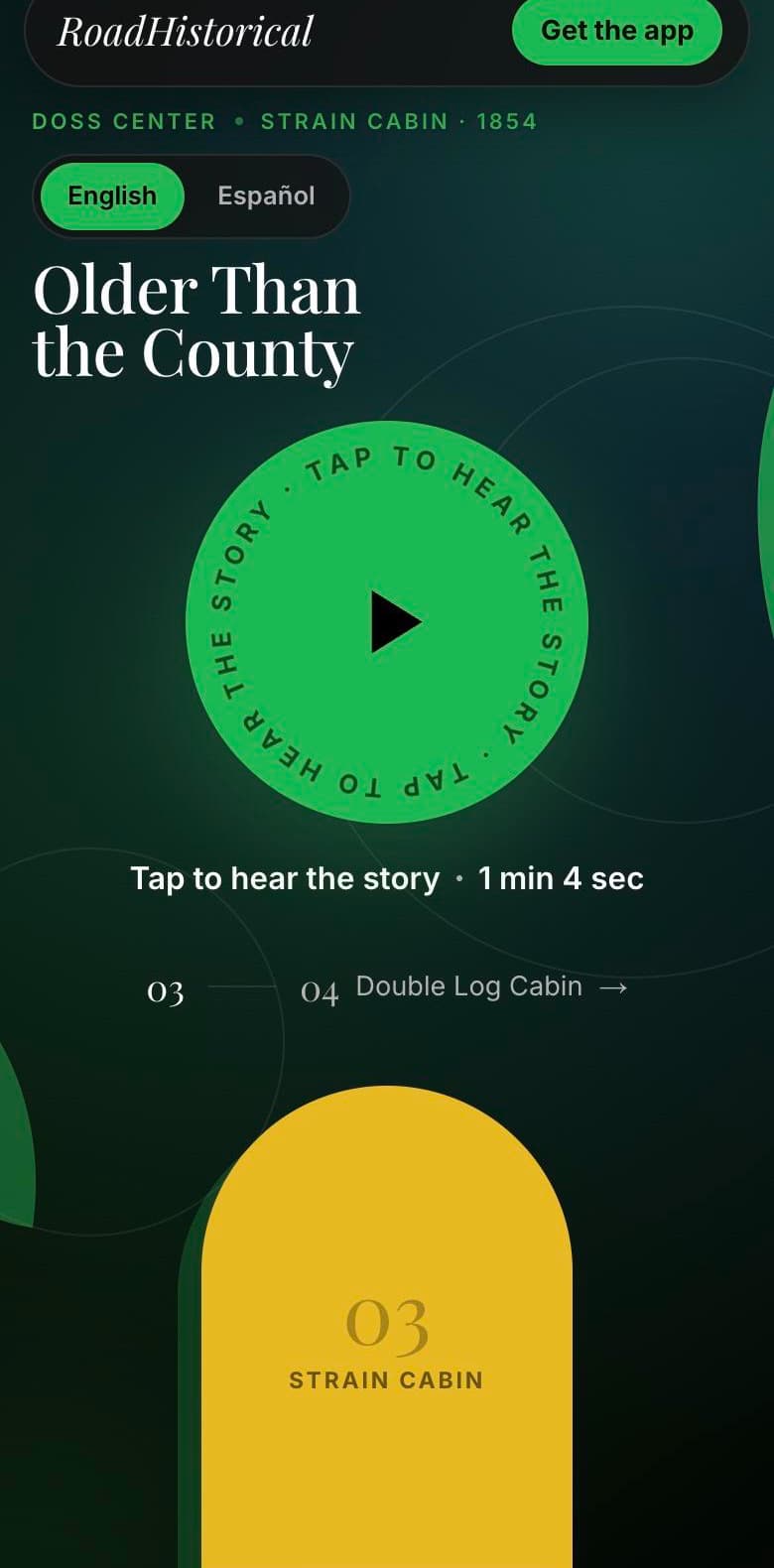
They point a phone camera at a QR code. No app, no account, no password. Stories play in English and Spanish.
Try it now
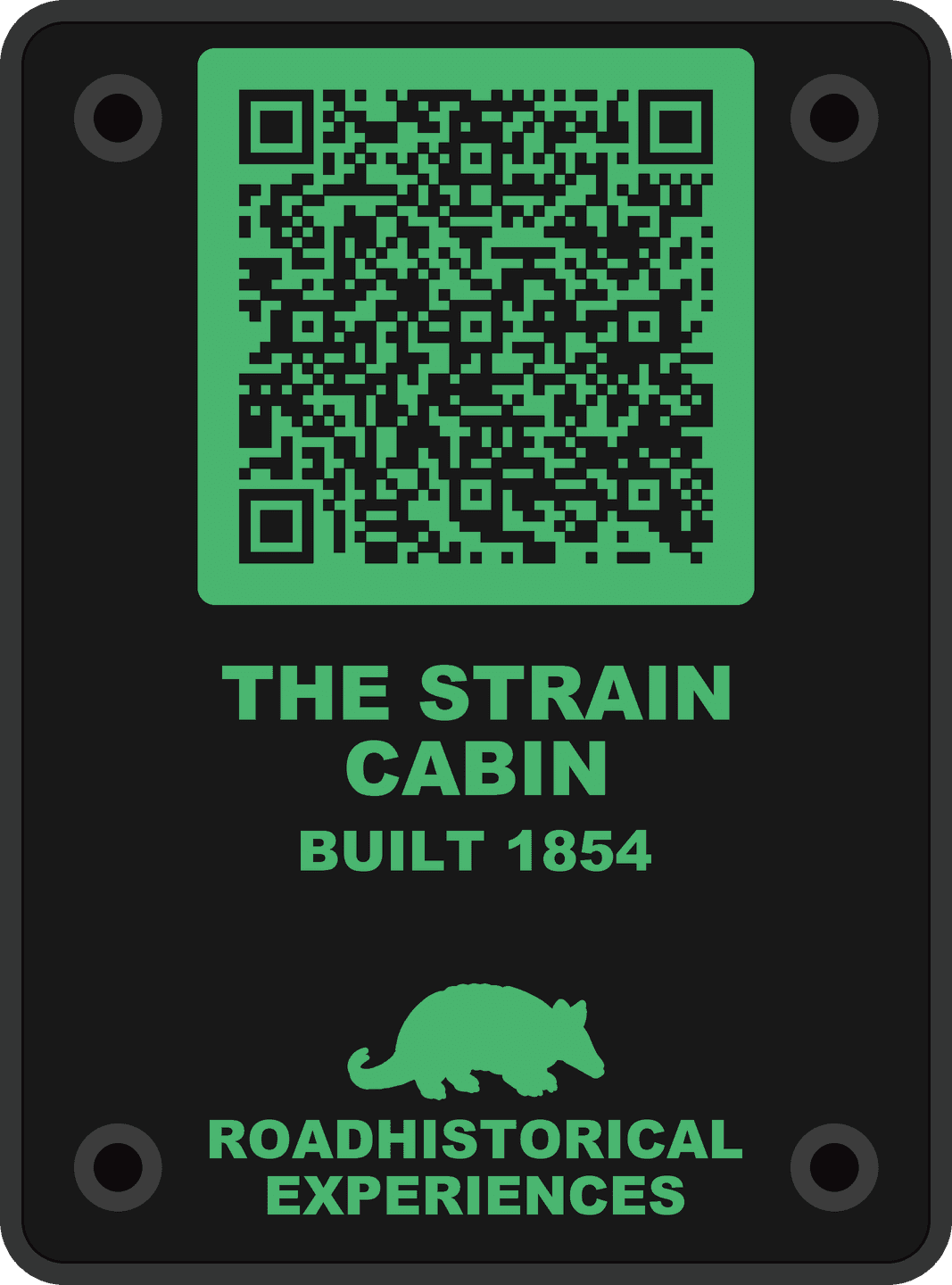
Drag to turn it over
Scan it with your phone camera
You will hear exactly what your visitors hear.
Or hear the Strain Cabin hereFor your board and your grants
Grant applications and board reports ask how many people came and where they came from. You will have the answer, with a file to attach.
Hotel occupancy tax (HOT) funds
Texas cities can spend hotel occupancy tax on museums and historic sites that draw visitors from out of town, and they often ask for proof when you apply and again when you report. Every check-in records the town and ZIP code each visitor came from, so you can show who traveled to see you.
Top places
attendance-report.csv · exported from RoadHistorical
Part of a network
Your site joins the RoadHistorical app and newsletter, where people are already planning Texas history trips. Every partner sends travelers to the next.
In the app
Your site appears on the map and among nearby experiences, next to 16,000+ historical markers.
At your site
They land on your map and in your reports, and they hear your stories.
In the newsletter
Your events and new stories, featured to RoadHistorical readers across Texas.
Across the networkComing soon
A visitor who finishes at a nearby site sees where to go next. Sometimes that is you.
Partners who join now help shape these, and get them first.
Stories that link your site to related places across Texas. A visitor who finishes with you knows where to go next, and visitors at those places find their way to you.
Connected stories across sites
AI that helps your staff search, organize and connect your own collections, from letters and photographs to oral histories. It runs on a machine at your site, so your archive stays under your control, and every answer points back to its source.
Your archive, searchable · Sources on every answer
Compared with what you use today
| What you need | Paper guest book | Lobby tablet | RoadHistorical |
|---|---|---|---|
| Visitors sign in on their own phone | No | Shared screen | Yes |
| Numbers you can report | Retype by hand | Yes | Yes, live |
| Map of where visitors came from | No | Rarely | Yes |
| Keep using your paper sheet | Yes | No | Yes, it counts too |
| Narrated stories at each exhibit | No | No | English and Spanish |
| Hardware to buy, charge and clean | None | Tablet, stand, charger | None |
How it works
Sites can go live as early as the same day. Your staff never has to touch the technology.
Step 1 · 15 minutes
Tell us about your site and the stories you want people to leave with.
Step 2
We research, write and narrate. You approve every word before anything goes live.
Step 3
Printed tiles for your exhibits and a QR card for the front desk.
Step 4
Visits appear on your dashboard as they happen.
Andres Ortega
Founder, RoadHistorical
I set up every site myself, and I read every message that comes through this page. If you are not sure where to start, write to me. I will tell you honestly whether this fits.
Pricing
A small historical society and a city museum need different things, so we quote each site. Tell us about yours and we will send a written quote.
Visitor privacy
Email is optional. News from you and news from RoadHistorical are separate checkboxes, both off until the visitor ticks them.
Download your full visitor list whenever you like. Fix or remove an entry on request.
We do not sell visitor data or show ads to your visitors.
Questions
No. Visitors scan a QR code at your front desk and sign in on their own phone, in the browser. There is nothing to install and no kiosk to buy.
A live view of your visits, a map of where visitors came from, and attendance by day, week and month. You can export the list any time.
Yes. Staff can enter paper sign-in sheets with the names, emails and dates people wrote down, and those visits count on the day each visitor actually came.
Museums, libraries, historic sites, historic neighborhoods and main streets, historical commissions, visitor centers, and city and county facilities that welcome the public and want to know who comes through the door.
Attendance by day, week and month, and where your visitors travel from, are the kind of figures grant applications and board reports ask for, and you can export them whenever you need them.
Texas cities can fund museums and historic sites from hotel occupancy tax when the spending brings visitors from out of town, and many ask applicants to show that. The Experience Platform records the town and ZIP code each visitor came from and exports it as a spreadsheet. Your city decides what it accepts as proof.
A small 3D-printed tile sits beside an exhibit or landmark. A visitor scans it with their phone camera and hears the story, narrated in English or Spanish, with nothing to download.
It depends on the size of your organization and what you want to start with. Tell us about your site and we will send a written quote.
Talk with Andres
No sales team and no obligation. Just a conversation about your site.
Prefer email? support@roadhistorical.app